

Procurement
Every purchase starts as a request and ends as a reconciled payment — with every document, price, and delivery on record between them.
Included in the full ERP. Modules are not sold individually.
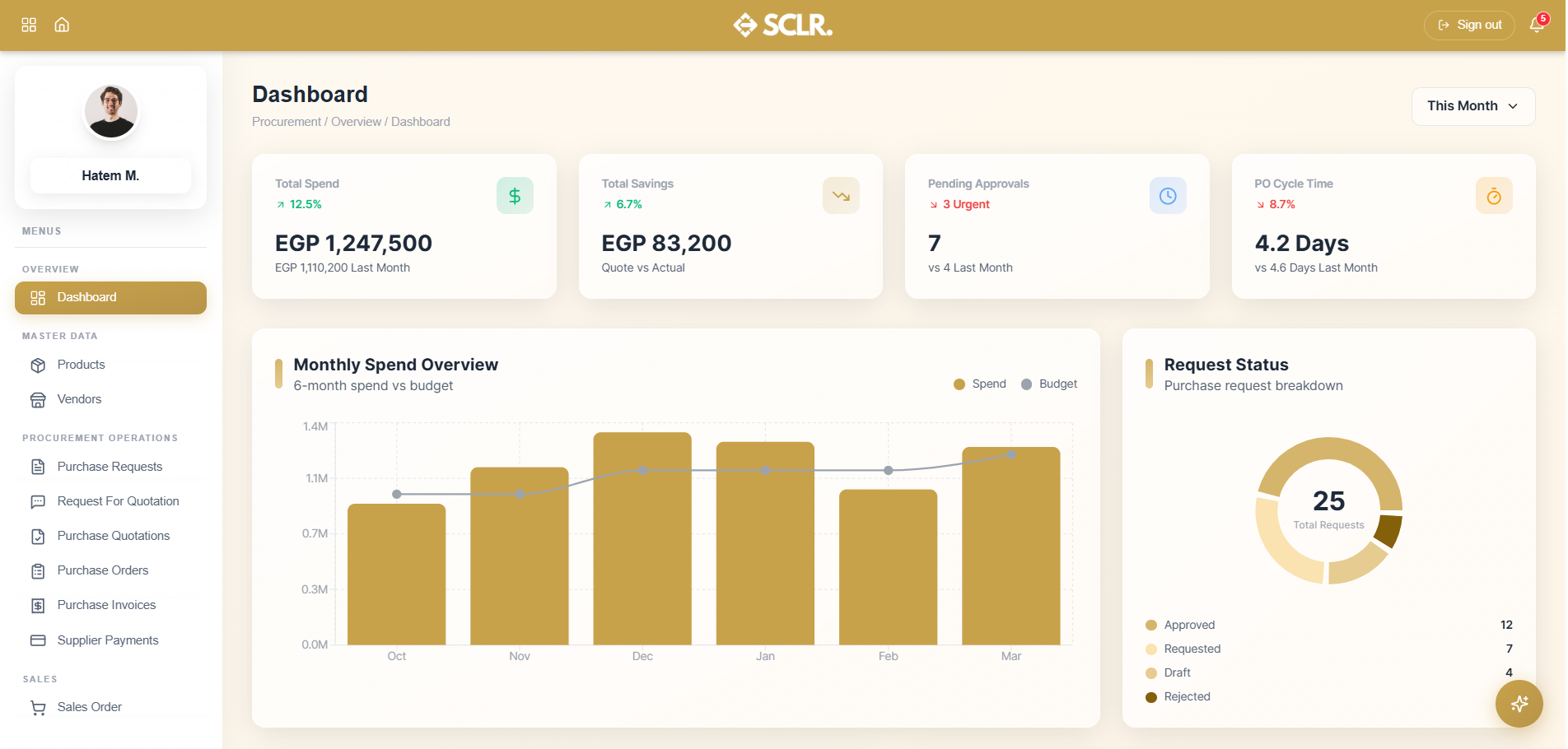
Here's how Scaler's Procurement module changes how you operate
Every purchase request enters the system as a tracked record — requester, items, deadline, and approval status in one place. Pending approvals surface on the dashboard with urgency flags, so the right person can act before the deadline passes.
Before any payment goes out, the system has the quoted price on record. Invoice amounts are matched against the agreed quotation, so price discrepancies surface before the payment is processed.
When an invoice arrives, the system checks it against both the purchase order and the recorded delivery. Paying for goods that weren't fully received requires a deliberate override.
The moment an invoice is approved, it posts to Finance as a payable — vendor, amount, due date, and aging bucket already in place. Outstanding vendor obligations are visible in Finance from the moment they 're created.
What it manages
Real-Time KPIs & Analytics
- Total spend
- Savings vs quoted price
- Pending approvals
- PO cycle time
- Monthly spend vs budget
- Request status
- Top purchased items
- Supplier timeliness
Master Data
- Product catalog
- Product types and bill of materials
- Finance account mapping per product
- Vendor registry
- Payment terms and invoice matching type
- Vendor contacts
Procurement Operations
- Purchase request creation and approval
- RFQ creation and vendor dispatch
- Vendor quotation management
- Purchase orders with receipt recording and 3-way match enforcement
- Purchase invoice approval
- Supplier payment recording and reconciliation
How procurement connects inside SCLR
Every record you create in Scaler updates the connected records across the system.
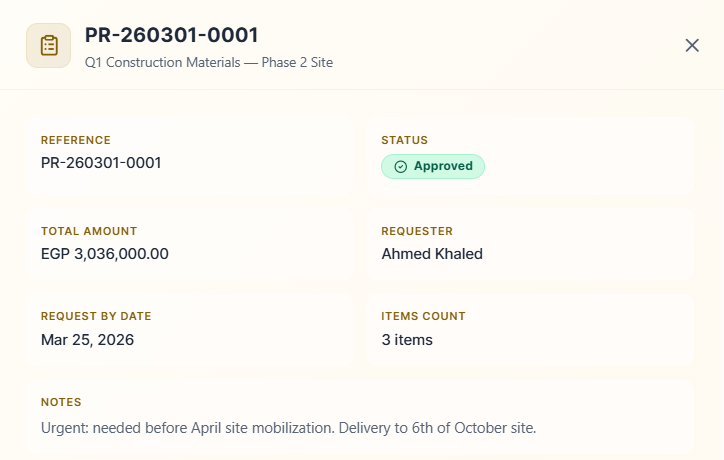
A purchase request enters Procurement from any direction — raised manually for company supplies or assets, created automatically when a sales quotation hits missing stock, or triggered by a restock action on a WMS inventory alert.
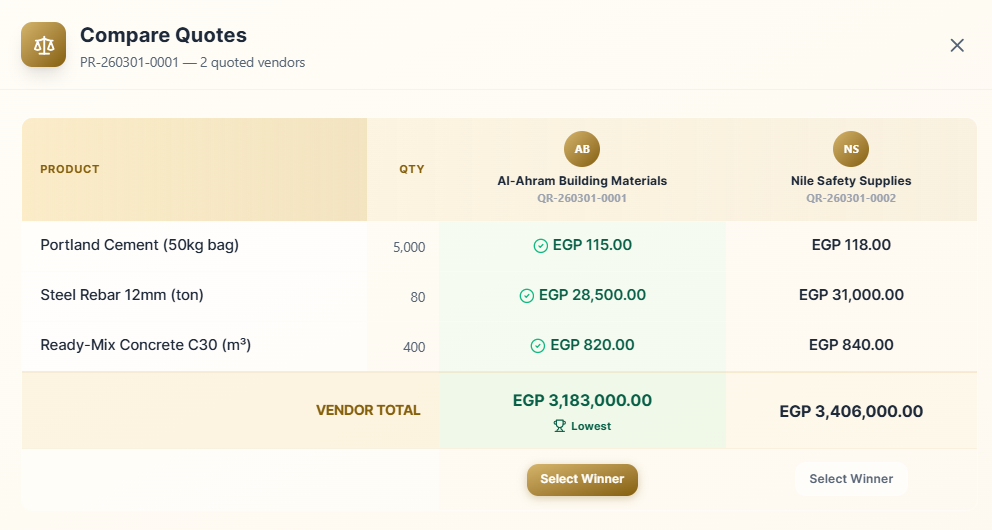
The procurement team sends an RFQ to one or more vendors and receives their responses as quotations for comparison.
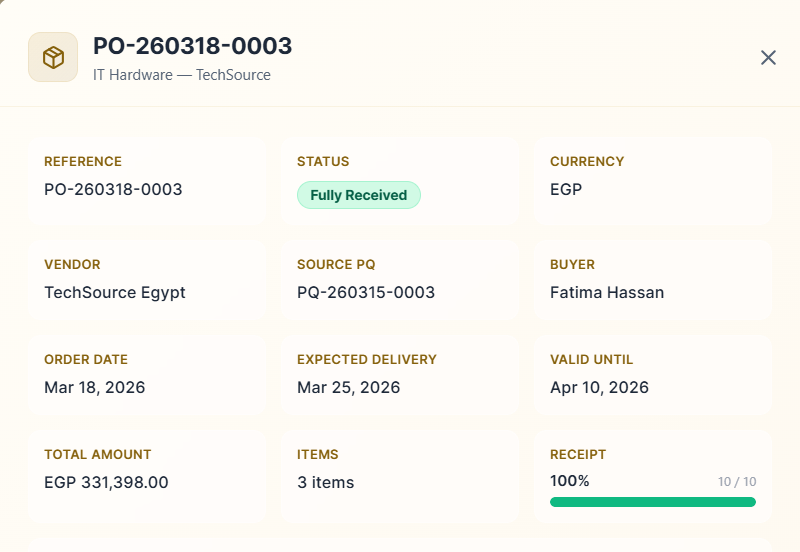
The selected quotation becomes a purchase order and is issued to the vendor.
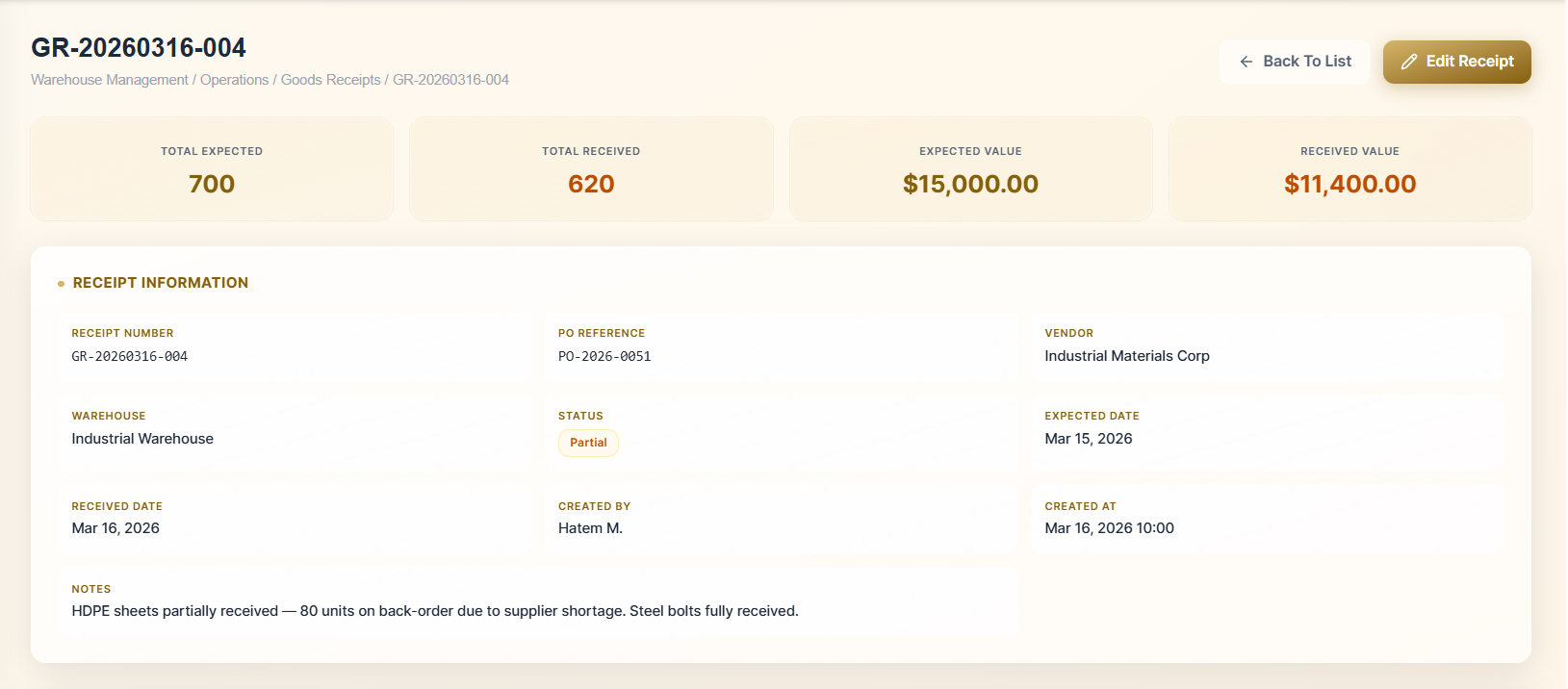
Goods are received in WMS — stock updates automatically based on what arrived, and the receipt status reflects on the purchase order in Procurement.
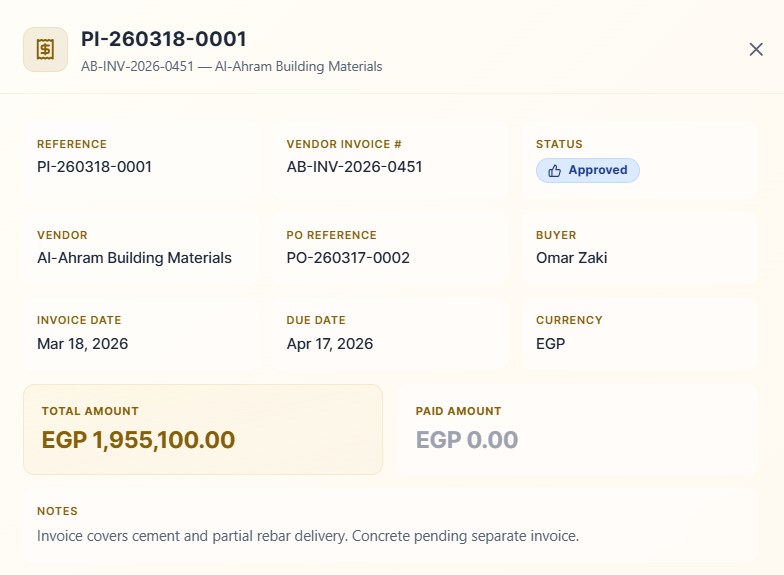
The invoice is approved in Procurement and posts to Finance as a payable immediately — vendor, amount, due date, and aging bucket already in place.
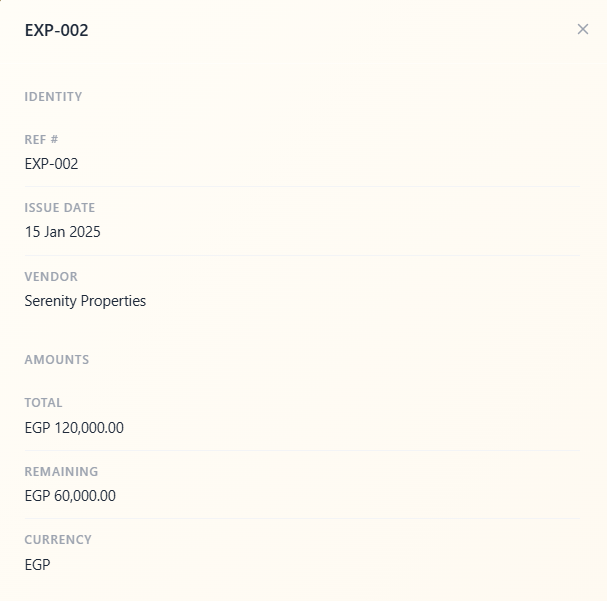
Accounting entries post to Finance at every stage — receipt, invoice approval, and payment — according to the accounting rules configured for your business.
Getting started with the Procurement module
Your two starting points are your product catalog and your vendor list. Products define what can be requested and purchased — including the Finance accounts each item posts to. Vendors carry the payment terms and invoice matching rules that apply across every document in the chain.
Both can be added one by one or imported in bulk. Once your product catalog, vendor list, and accounting rules are in place, your procure-to-pay flow is ready to run.
Other Modules
Sales
Pipeline, lead distribution, activity tracking, and commission structures all tied to one lead record.
Order Management
Quotations, sales orders, proof of delivery, and invoicing triggered from Sales and wired to Warehouse and Finance.
Marketing
Connected Meta campaigns with lead form sync, budget pacing, and conversion data flowing back from Sales.
Real Estate Commercial Operations
Availability, EOI, quotation, contract, and payment schedule posted to Finance the moment a contract is signed.
HR
Recruitment pipeline, employee records, attendance rules, leave management, and self-service from one record.
Payroll
Salary components, structures, employee contracts, payroll runs, and automatic Finance posting no manual entries.
Finance
Accounting rules, general ledger, financial reports, and period close every module posts here.
Warehouse Management
Goods receipt against POs, picking lists from sales orders, cycle counts, and batch and expiry tracking.
An AI assistant that already knows your whole business.
It lives inside the same system as your data. Ask what's happening in sales, whether a payment has come through, or how to set up a payroll rule and get a direct answer. No setup. No context to manage.
How do I...
Ask anything about the system — setup, flows, approvals, fields. Get a direct answer without hunting through documentation.
What's happening with...
Ask about any department, customer, or record and get reported to instead of navigating to find it.
Do this for me.
Coming soonAgent mode will perform tasks and run flows on your behalf within your existing permissions and approvals.
Implementation doesn't take months.
The transition is smoother than you think. Scaler is built around the terms and workflows your team already recognizes no maze to navigate, no months of getting used to a complicated, foreign system.